
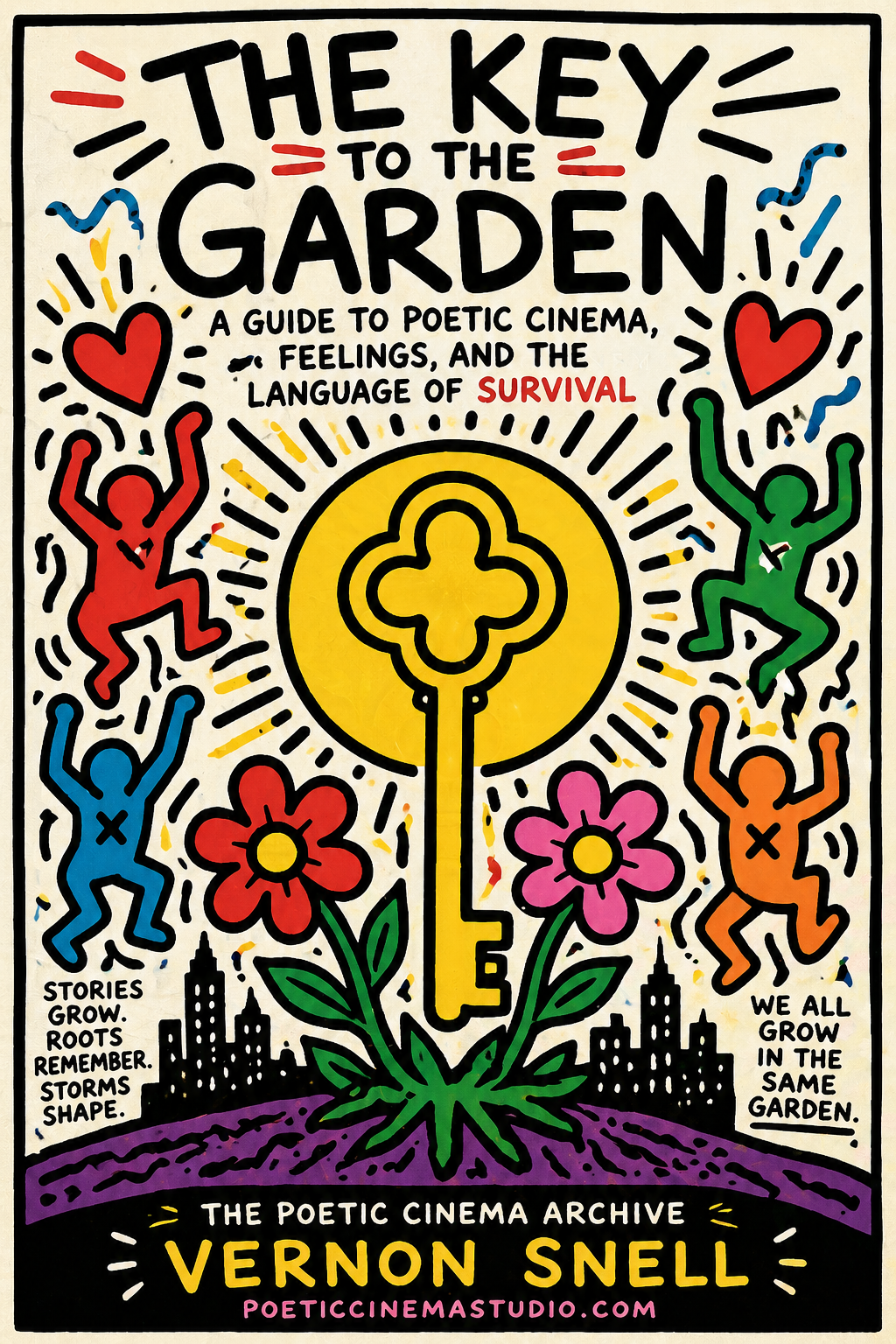
This book is the key to a larger body of work.
It is not a traditional novel, and it is not a typical philosophy book. It is a guide to understanding the creative world known as Poetic Cinema, created by Vernon Snell.
Poetic Cinema is a storytelling method built from lived experience, emotional survival, observation of society, and a symbolic language known as the Garden.
In this symbolic language:
Flowers represent people.Roots represent ancestry and memory.Soil represents environment.Storms represent emotional struggle.Sunlight represents care and awareness.Concrete represents adversity and systemic pressure.
Through these metaphors, Vernon Snell explores human life, identity, struggle, addiction, resilience, and emotional understanding.
The stories found throughout the Poetic Cinema archive are not written as ordinary fiction. They function more like artifacts of experience — observations about the human condition drawn from decades of life lived inside complex social environments.
Many of these works were created during a period of personal collapse and reflection, when writing became a way to understand the relationship between the brain, emotion, environment, and survival.
Because of this origin, the stories often feel different from conventional literature.
They move between memory, symbolism, reflection, and narrative. They explore the internal landscape of the mind as much as the external world.
This book exists so readers can understand the system behind those stories.
